
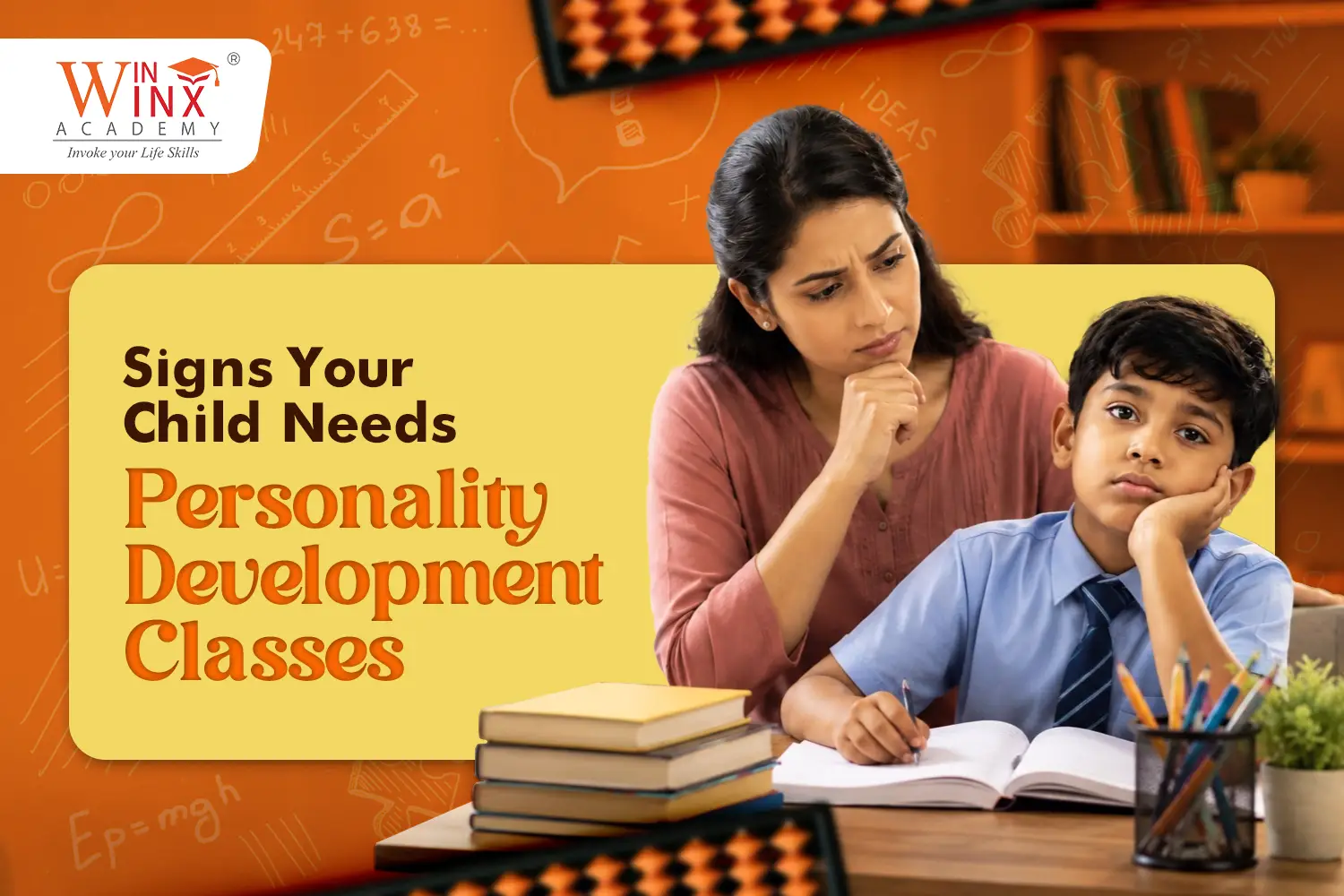
- Early guidance encourages confidence and independence.
- Strong communication contributes to good relationships and better performance in class.
- A personality development class will aid in facing challenges on a day-to-day basis.
- Teamwork activities encourage cooperation, empathy, and respectful interactions.
- Resilience helps children handle mistakes and overcome failures.
Every child has a unique personality. Some children enjoy talking and socializing more, while others need a little bit more encouragement to do so. A shy child is nothing to worry about, but if their shyness is interfering with their confidence, communication, relationships, education, or everyday life, then they need to be taught how to be more outgoing.
Personality development classes can improve their social skills and even more. It covers a lot more than just communication skills; it develops their confidence, empathy, decision-making abilities, teamwork, responsibility, and much more. As a parent, you should know what signs show that your child needs extra help with structured support.
11 Warning Signs Your Child May Need Personality Development Classes
Know the warning signs that indicate your child needs assistance when it comes to personality development.
1. Your Child Frequently Withdraws From Social Situations
- Does your child regularly skip group activities, stay idle around other children, or hesitate to participate in social activities?
- Occasional shyness is completely normal. However, the real problem occurs when this shyness turns into avoidance and refusal to engage with others.
- As a consequence, they miss opportunities to build friendships and engage in group activities.
- A Personality development classes can provide a comfortable environment where children gradually learn to participate in group activities and communicate with others freely.
2. They Often Use Negative Self-Talk
- A lot of parents may face such a problem when their child starts saying things like, “I can’t do this,” “I’m not good at it,” or “Others are better than me.”
- Kids start giving up easily on various activities because of negative thoughts and self-talk.
- That is why parents should teach little ones that there are no failures, but they can learn from them rather than being perfect.
- Also, parents should try to appreciate their efforts, rather than cause discouragement.
3. They Find It Difficult to Accept Feedback
- Does your child become upset, angry, defensive, or even silent when being corrected?
- It is most important for a child to learn the difference between criticism and suggestions, as it can be an opportunity to improve.
- Children will benefit from role-play, interactive activities, and discussions to learn how to take criticism and respond positively to feedback received.
4. They Constantly Seek Approval From Adults
- Some children feel like they cannot make even small decisions without getting mom, dad, a teacher, or another trusted adult to approve first.
- While some children should ask an adult for help, sometimes we need to let a child make his or her own decision in order for them to learn.
- By giving children limited choices like yes or no and letting them build confidence, we can help a child learn to make smart decisions.
5. Small Problems Lead to Big Emotional Reactions
- Frequent crying, anger, frustration, or tantrums over relatively small setbacks may signal that your child needs help learning how to control his or her emotions.
- Children need to learn how to manage their emotions, but sometimes they need some help and support in doing so.
- Things like taking a break, deep breathing, talking about feelings, and more can help kids.
- A personality development class can help your child learn about emotions and how to control them through stories, games, discussions, and much more.
6. Your Child Avoids Trying New Things
- Does your child refuse to engage in novel activities, shy away from competitions, or feel insecure when their routine is disrupted?
- Fear of the unknown keeps students from exploring activities that interest them.
- Children who fear the unknown will likely refrain from participating in sports, games, art, or any class where they risk errors.
- Parents can encourage kids to ease into new endeavors by first watching, then playing with a buddy and, lastly, engaging on their own.
7. They Struggle With Teamwork and Sharing
- Teamwork is about compromise, listening to each other, and cooperating on a joint task.
- If your kid often fights over roles in a group project, refuses to cooperate, or gets frustrated when other people have different ideas than they do, they may need some help developing their collaborative skills.
- Group games and cooperative activities can help kids understand that teamwork is not a competition; instead of trying to get their own way, everyone has to put in effort to get things done.
8. Communication Does Not Come Easily
- Some children may find it difficult to communicate their needs, explain or answer questions, and speak out loud.
- They might know what to say, but they feel insecure about mistakes that could be made.
- This could lead to issues with the classroom setting, as well as their relationships with others.
- A PD classroom can give them a chance to tell stories, introduce themselves, discuss, present, and even practice interactive communications.
- This can allow them to practice more often, and eventually be able to do these things without being as intimidated by the thought of mistakes.
9. They Struggle to Understand Other People’s Feelings
- Empathy is one of those foundational qualities that underlies healthy relationships.
- Children need to know that other people have thoughts and feelings that are, at times, different from theirs.
- If your child seems to have trouble recognizing when someone is hurt or struggling, or if he rarely thinks about other people’s feelings and perspectives, you may want to work on empathy-building activities.
- Stories, dramatic play, discussion, and real-life examples all help promote empathy in children.
10. They Avoid Responsibility
- Does your child seem to refuse to take on age-appropriate responsibilities, find ways to shift blame onto others, and make others do things they could or should do themselves?
- Responsibility allows kids to be independent.
- Even small amounts of responsibility, both at home and at school, can help teach children that they are in control of their own actions.
- Simple responsibilities such as packing away one’s school bag, keeping personal items in order, doing simple chores, or even getting ready for the next day can be assigned to kids by parents.
11. They Give Up Easily When Things Become Difficult
- A child who is quick to say he or she cannot do something, whether it be a puzzle, assignment, game, or activity, may need help with perseverance.
- It is important to remember that failure is a part of life, and something you can’t always do right away.
- A parent might want to try encouraging his or her child to work through things patiently, taking things step by step, and practicing the skill until they get it, rather than just doing something once and giving up, or assuming they can’t do it.
- Parents should also remember to acknowledge progress and hard work that has been put into something, and not just what the result is.
How Personality Development Can Support Your Child
Personality development does not mean taking a quiet child and trying to turn them into the loudest one, or forcing another part of their personality to grow. It means helping a child feel comfortable in their own skin, to express themselves, to interact, to deal with emotions, to make choices, and to navigate conflicts.
At Winwinx Academy, we focus on providing engaging activities that will allow kids to gain confidence, enhance social and communicative skills, teamwork abilities, emotional intelligence, or any other competencies they may need to thrive in the modern world.
Final Thought
To conclude, with encouragement at home and structured learning opportunities, children can gradually be more confident, independent, empathetic, cooperative, and resilient. The most effective Personality development classes will provide them with the opportunity to explore their capabilities and mistakes without judgment while having a sense of achievement.
FAQs
What is a personality development classes for children?
- It builds confidence, communication skills, soft skills, team spirit, socialization, decision-making skills, and much more through certain activities.
How will you know that your child needs help with personality development?
- When they have problems interacting with others, low self-esteem, or have issues communicating with you or others, then they need help with personality development.
Is attending a personality development classes suitable for shy children?
- Yes, because through certain activities that will be taught, a shy child may be able to speak out more and be more comfortable being around other people. It also helps them boost their confidence but does not force them to be outgoing if that is not who they are.


0 Comments
Trackbacks/Pingbacks