
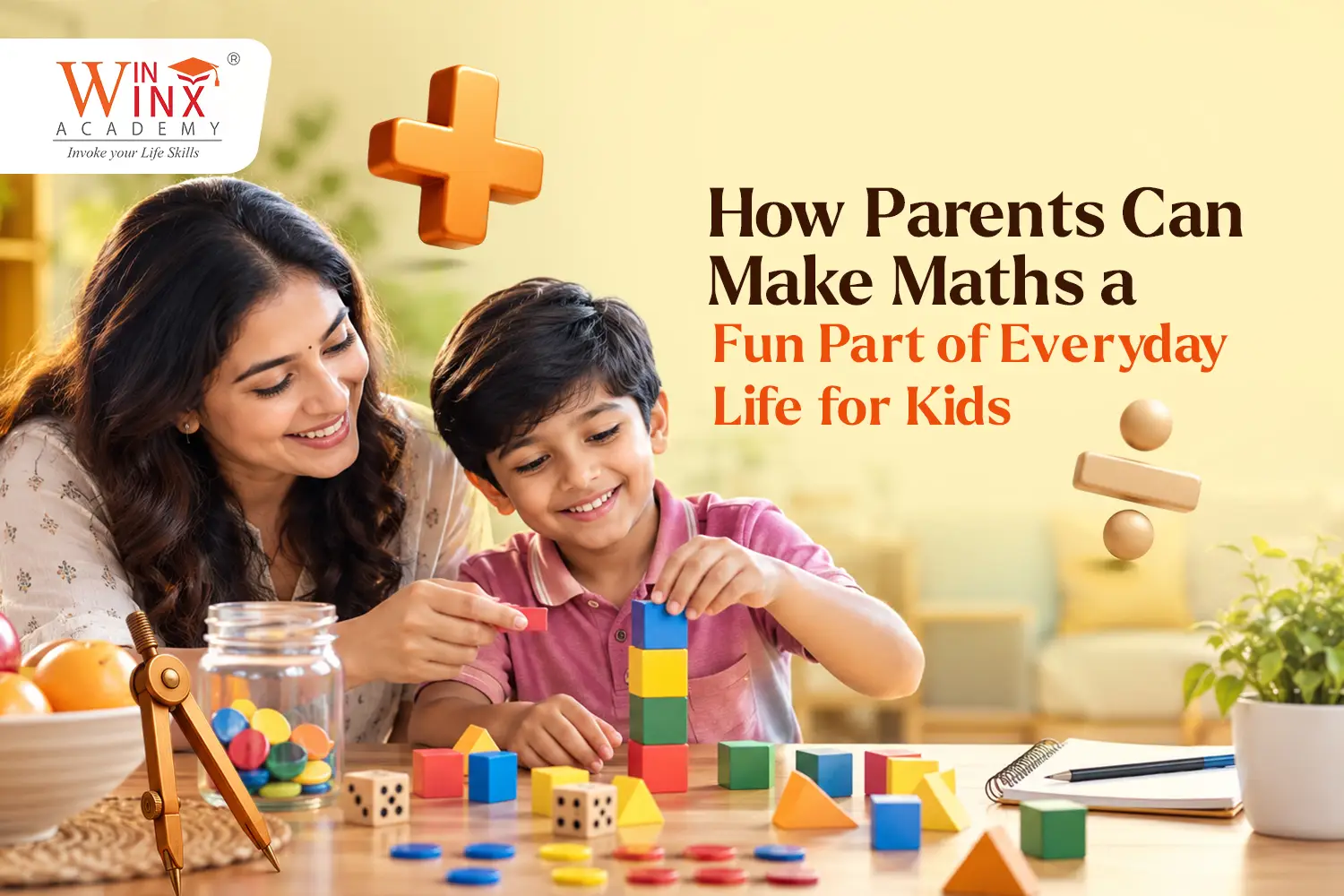
- Kids don’t hate maths. They hate being watched while they get it wrong.
- A good puzzle never feels like homework; half the time, they don’t even notice they’re learning.
- A grocery bill or a five-minute car ride is enough for a quick number game.
- Building, drawing, and measuring make maths stick better when hands are involved.
- An abacus is sneaky like that. It looks like a toy long before it feels like a lesson.
Say “Maths homework” to a kid, and watch their shoulders sink. Say “Wanna play something?” to the same kid, with the same numbers, and suddenly they’re all ears. Nothing about the maths changed. Only how it walked in the door.
That’s the whole trick behind a good maths game. Lose a round? You just play again. Nobody’s grading you, and nobody’s watching you fail. Take that fear away, and kids start trying things they’d normally never touch with a worksheet in front of them.
Here are a few ways to bring Maths into everyday life: no classroom, no app, and not even a worksheet needed.
Why Treating Maths Like a Game Actually Works
A worksheet tells a child there’s exactly one correct path to the answer, and they’d better find it quickly. A game says something completely different: go ahead, guess, get it wrong, and try again. Nobody’s keeping score against you.
Kids who meet numbers through play tend to stay with a tough problem a lot longer than kids who meet the same numbers on a printed page. Losing a round in a game just means round two. Getting a sum wrong on paper, for a lot of kids, feels much heavier than that.
Puzzles Kids Can Solve With Nothing but a Pen
You don’t need an app, a kit, or a subscription to start. Some of the best fun math puzzles are things you can scribble on the back of an old envelope:
- A number sequence with one piece missing, left for them to figure out
- A riddle where the real answer is hidden inside a small calculation
- A simple crossword-style number grid for younger kids
- One quick puzzle stuck on the fridge every morning, swapped out daily
There’s a particular look on a child’s face the moment they crack a puzzle on their own, and honestly, that look does more for their confidence than the puzzle itself ever could.
Number Games for the Car, the Kitchen, Wherever You Happen to Be
Some of the best learning doesn’t happen at a study table at all. Here are a few fun number games that can slide into ordinary dead time:
- Counting down a car number plate’s digits until they hit zero
- Working out a grocery total in your head before the cashier does
- Guessing how many steps it will take to reach the next lamppost, then checking
- Turning a cricket score into quick addition and subtraction on the spot
None of this looks like a lesson from the outside, and that’s rather the point.
ALSO CHECK – How the Abacus Makes Maths Easy and Boosts Confidence
Hands-On Ways to Explore Maths Beyond a Notebook
Numbers don’t need to live only on a page. Here are a handful of creative Fun Maths Activities for Kids physically involved:
- Building shapes from blocks and counting the edges and corners
- Baking together and letting them double or halve a recipe themselves
- Drawing and jumping along a number line on the floor
- Sorting old coins or buttons by size, colour, or value
A child typically remembers what they’ve created themselves much longer than what they’ve simply copied from a board.
An Abacus Isn’t Just a Tool; Kids Treat It Like a Toy !
Give a child an abacus and see what happens! They don’t ask what it’s for. They simply begin sliding the beads; it clicks in their fingers, and numbers start moving right in front of their eyes. No imagination required.
That’s what makes learning math with abacus work so well for kids who find a page of numbers scary. They’re not solving a sum anymore; they’re playing with something that happens to teach them maths while they’re at it. By the time they realise they’ve become faster at calculations, they’ve forgotten they were ever nervous about numbers in the first place.
What a Genuinely Good Maths Program Looks Like
What really helped your child? Ask any parent, and you’ll find it’s rarely just one thing. It’s usually a mix of puzzles, abacus activities, and smart games, all building on one another rather than following a fixed sequence like chapters in a book.
What that mix usually looks like:
- A hands-on tool, like the abacus, so numbers stop being abstract
- Puzzles that teach patience, not just speed
- Memory games that quietly stretch what a child can hold in their head
- A timed challenge now and then, just enough to be fun, not stressful
- Enough variety that boredom never gets the chance to set in
Put these together in one place, and you get kids who are fast and comfortable with numbers—not one at the cost of the other.
Why This Actually Matters
A kid who grows up playing with numbers doesn’t carry the dread so many of us still remember from our own school days. Hand them a hard problem, and the first thought is, “Let me try,” not “I can’t do this.” That one shift, from fear to curiosity, is worth more than any mark on a test paper.
Final Thought
You don’t need a special day for this. A car ride, a Sunday in the kitchen, or five minutes at the dinner table—that’s enough to turn a maths game into something your child simply does, without ever calling it “practice.”
If you’d rather build it into something consistent, Winwinx Academy’s Abacus classes bring puzzles, flash cards, memory games, and hands-on abacus work together, so learning never stops feeling like play.
Related Blogs of Abacus
How the Abacus Boosts Brain Development During Early Childhood
A Complete Parent’s Guide to Abacus and Traditional Math Learning
How Abacus Training Sharpens Concentration and Mental Focus in Kids
FAQs
- How often and for how long should parents use maths games?
You don’t need long sessions to make a difference. Just 10-15 minutes a day is enough to build a consistent habit. A short daily session is usually better than trying to fit everything into one long session at the weekend.
- My child doesn’t like maths. Can games really change that?
They can. Maths games can make numbers feel less like a test and more like something to explore. When children aren’t constantly worried about getting the answer wrong or being evaluated, they may feel more comfortable trying, making mistakes, and trying again. Over time, that can help replace some of the dislike or anxiety around maths with curiosity.
- At what age should I introduce puzzles and number games?
You can start with simple counting and pattern games from around 4 or 5 years old. The good thing is that these activities can grow with your child. As they get older, the same basic idea can become more challenging, so there is no fixed age at which number games need to stop.
- Do maths games need to be educational to be useful?
Not necessarily. A game doesn’t have to feel like a lesson to help a child practise numbers, patterns, logic, or problem-solving. In fact, part of the appeal is that children can learn without feeling as though they’re doing extra homework.
- What if my child gets an answer wrong?
Let them try again rather than immediately giving them the answer. The goal isn’t to get every question right on the first attempt. Making a mistake, thinking about it, and trying a different approach is part of what makes games useful for building confidence with numbers.


0 Comments