
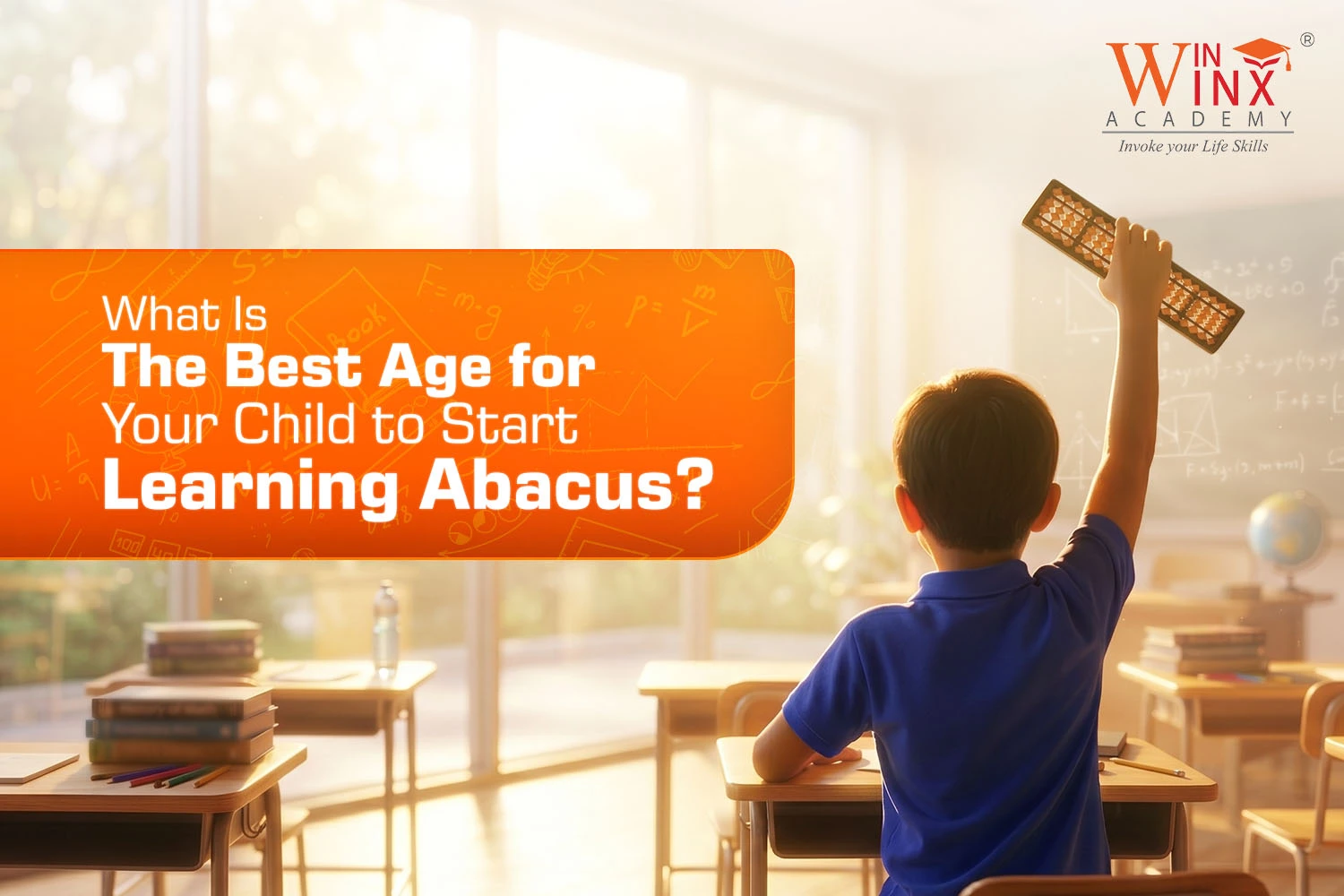
- The best age to start abacus for children is usually between 4 and 8 years.
- An abacus helps a child’s mind grow while building number skills simultaneously.
- Solving tricky calculations can be simpler when they begin early.
- Readiness depends on two main factors (i.e, age and individual development).
- Consistent practice and proper guidance lead to long-term benefits.
Building a strong base in numbers involves the creativity of parents looking for various instruments and styles to help their children. One of those tools that has been working for many years is the abacus. The abacus, which is a mental math tool to boost your brain and develop cognitive skills, has become a global trend. However, one of the questions that parents frequently ask is: at what age is it best for their child to begin learning the abacus?
Early exposure shapes how easily new ideas stick later on. Learning with an abacus isn’t just about counting; it builds connections across the brain. Skills grow quietly, day by day, without flash or noise.
Understanding Abacus Learning
The abacus is a manual calculating device that offers assistance to school children in doing math operations such as addition, subtraction, multiplication, and division. The children shift in time from the actual use of the hardware abacus to just imagining the beads and calculating in their minds.
This method is primarily used to improve maths for children as it involves the whole brain, that is, both the left and right hemispheres. The left one pays attention to the numbers and logic, while the right one boosts the creativity and visualization of the kids.
What is the Best Age to Start Abacus?
According to most specialists, the best age for children to begin learning the abacus is from 4 to 8 years. This is the time when the child’s brain is most optimistic about learning new things. Therefore, it becomes easier for him or her to grasp these skills and build stronger neural connections.
These days, children:
- They are good at basic motor skills
- Their attention span is much quicker
- They are so eager to learn new
Children who are below 4 years of age should not start with abacus training because the learning of the structure and rules of the device may be difficult for them. In contrast, the later age of abacus training is also great, but the younger students get the rules faster and also have long-term benefits.
Why Early Learning Matters
The introduction of Abacus training at the appropriate time can make a precious and long-lasting effect on your child’s academic and personal growth. Read the following statements to know that the matter of the utmost importance is early learning:
- Brain Development on a Higher Level
Abacus training encourages the activity of both the left and right hemispheres of the brain. This level of balance results in enhanced memory, concentration, and analytical abilities.
- Concentration Has Improved
The kids visualizing the movement of beads on an abacus teaches them to focus better. This concentration that has been increased is a factor that is contributing to their performance not only in math but also in other subjects.
- Firm Numerical Base
Kids having an early learning experience of numbers are able to build a self-confidence that is good enough self-confidence to overcome the fear of maths. This is very vital as it is the joy of acceptance for mathematics to children, and it is the main difference for future studies.
- Better Problem-Solving Ability
The active learners of the abacus become logical thinkers, and it also helps children learn how to solve problems quickly in a proper manner.
Signs Your Child Is Ready
Programs offered by academies like Winwinx Academy focus on holistic development, ensuring that children not only excel in math but also grow intellectually and emotionally.
Readiness is related to your child’s individual development, but it is also a function of age. If your child shows any of these signs, they may be ready to start:
- Identifying numbers 1 to 10
- Involving counting or performing basic math
- Concentrating for brief periods
If your child exhibits these characteristics, then it is the perfect time for him or her to begin learning on the abacus.
Benefits Beyond Mathematics
Abacus learning not only involves numbers, but it also helps in the development of personality. Some of the other advantages are:
- Improve Memory: Children remember steps and visualise calculations.
- Faster Mental Maths: Mental maths for children quickens over time.
- Enhance Confidence: Self-esteem in calculations.
- Boost Academic Performance: Skills developed through abacus learning are used in various subjects.
Academies such as Winwinx Academy provide a comprehensive curriculum, not just for mathematics, but for a child’s overall intellectual, emotional, and social growth.
What Happens If You Start Late?
Parents often worry if their child has missed the ideal window. The truth is, abacus learning can benefit children even if they start later than the recommended age.
However, younger children tend to:
- Adapt more quickly
- Develop stronger visualization skills
- Gain long-term cognitive benefits
Older children may require more practice and patience, but they can still achieve excellent results with consistent effort.
Tips for Parents
To make the most of abacus learning, parents can play an active role:
- Choose the Right Program: Look for structured courses with experienced trainers.
- Encourage Practice: Regular practice is key to mastering abacus skills.
- Be Patient: Every child learns at their own pace.
- Make It Fun: Use games and interactive methods to keep your child engaged.
Remember, the goal is not just to learn calculations but to enjoy the learning process.
Final Thought
To conclude, choosing the best age to start abacus training at a well-known learning center like the Winwinx Academy can make a significant difference in your child’s development. Abacus learning is more than just a mathematical tool; it’s a powerful method to enhance brain function, improve concentration, and build lifelong skills. By introducing it at the right time, you’re giving your child a strong foundation for academic success and beyond.
Frequently Asked Questions (FAQs)
- What is the best age for a child to start learning abacus?
The right time to start learning abacus is generally considered to be between 4 and 8 years of age. During these years, children can very naturally acquire the concentration, visualization, and mental calculation skills that the abacus training intends to develop. - Can a child learn abacus after the age of 8?
In fact, children are not restricted to be 8 years old and below to learn abacus. It is fairly possible that children who are past 8 years old also work on their mental math through abacus learning along with further developing their focus and problem-solving abilities if guided and practising regularly. - How does abacus learning help children?
The practice of abacus develops mental calculation, memorizing capacity, focus, reasoning, imagination, and assurance. Besides these, it also aids in brain evolution and enhancement of the knowledge-based performance of the student. - How long does it take for a child to learn abacus?
There is no definite time as it is partly dependent on the age of the child, the effort given, and the speed of learning. With regular and methodical training, many children start to demonstrate enhanced concentration and mental calculation capabilities within a few months. - Is abacus learning only useful for mathematics?
Undoubtedly, the influence of abacus extends far beyond mathematics. Not only the abacus learners get to develop the core subject skills but also these children are capable of getting better in focus, memory, visualization skills, analytical thinking, independence, and even raise confidence levels which are generally seen in a vast range of day to day activities learning content.


0 Comments