
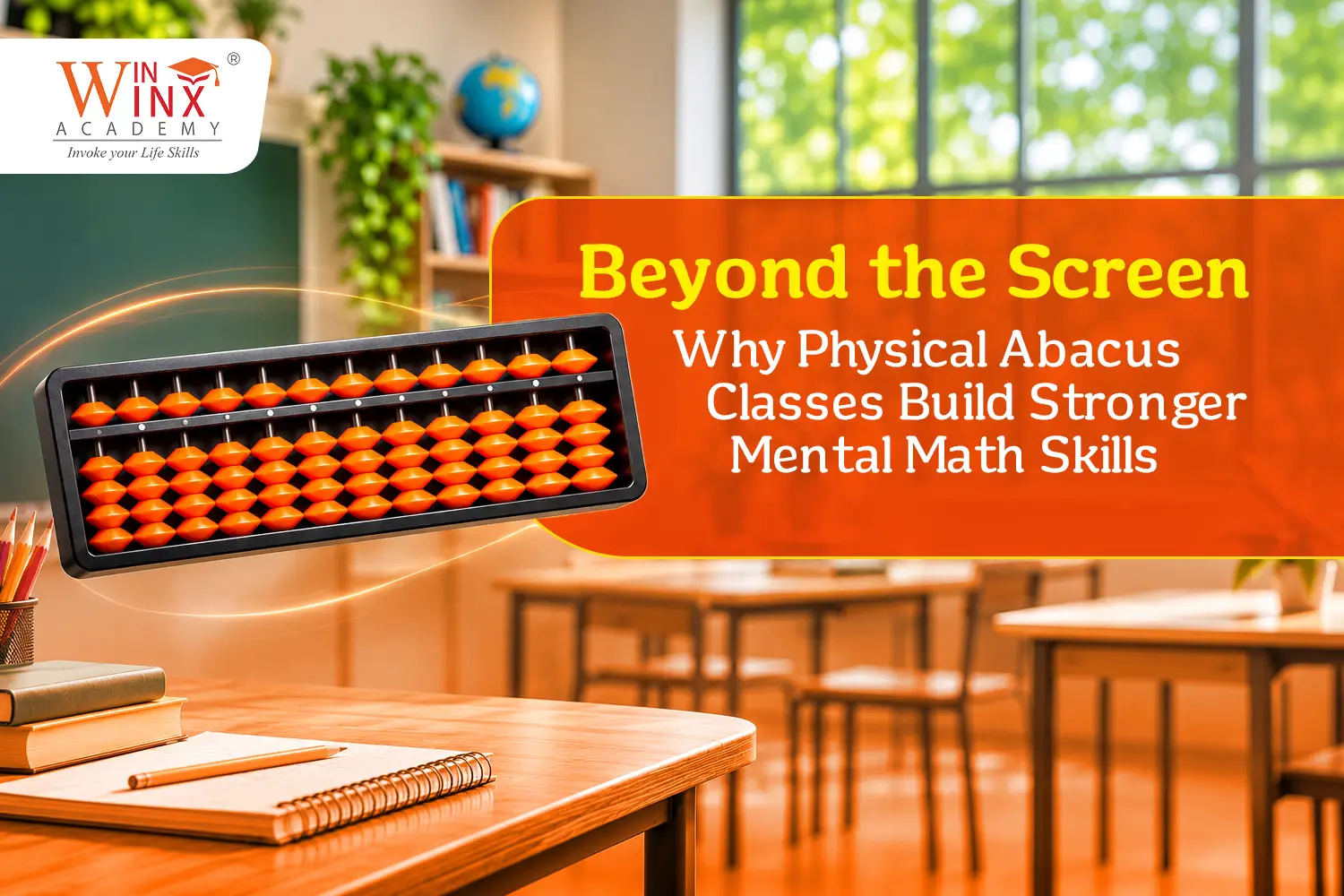
- A child who learns by moving real beads can eventually visualise them mentally-and that is where mental mathematics begins.
- Abacus apps are useful for additional practice once the basics are firmly established.
- A trainer can identify and correct an incorrect thumb movement in the second week, rather than waiting until the sixth month.
- Choosing abacus classes for beginners? Attend a trial class before enrolling.
- Practise for 15 minutes a day at home. Consistency matters more than marathon sessions.
“There are so many free abacus apps available now. Why should my child sit in a class with a wooden frame?”
Parents ask us this question often, and it is a fair one. Apps are affordable, colourful, and available at 9 pm, when the day’s activities are over. But watch a child using a screen for a while, and you may notice a familiar pattern: they tap, the answer appears, and they move on. Ask them how they arrived at the answer, and you may get little more than a shrug.
This blog explores what happens when a child learns using real beads under the guidance of a trained instructor, and why building that hands-on foundation can make a meaningful difference in developing mental mathematics skills.
Why Real Beads Make a Difference ?
Parents ask us this question regularly, and it is a fair one. Apps are affordable, colourful and available at 9 pm, when everything else is done. However, watch a child using a screen for a while, and you may notice a familiar pattern: they tap, the answer appears, and they move on. Ask how they arrived at the answer, and you may get little more than a shrug.
After a few months of hands-on practice, something interesting happens. The child’s hands begin to slow down, their eyes may look away from the frame, and they start moving beads that are no longer physically in front of them. This is called visualisation, and it marks an important step towards mental mathematics. The child is learning to picture the abacus and perform calculations mentally. A screen can display the beads, but it cannot fully reproduce the physical feedback of moving them-the touch, the click and the slight resistance against the fingers.
What the physical abacus gives a child:
- A feel for place value: Children experience number positions through the movement of beads under their fingers.
- Active use of both hands: Coordinated hand movements help keep children physically engaged in the learning process.
- Immediate visual feedback: An incorrectly positioned bead remains visible, making mistakes easier to notice and correct.
- Fewer digital distractions: A physical frame offers a focused learning experience without notifications, autoplay or tempting videos.
ALSO CHECK – How Abacus Training Sharpens Concentration and Mental Focus in Kids
Where Screens Do Help
To be fair, screens aren’t the villain. Once a child is comfortable using the abacus, an app can be a useful way to get extra mental maths practice. Timed drills, random sums and a little friendly competition on a rainy day can make practice more engaging. The problem begins when screen-based learning comes first, before the child has developed a clear understanding of the abacus. Without that foundation, there is little for them to visualise mentally.
Why Abacus Maths Classes Work Better with a Trainer in the Room ?
Abacus classes for beginners, learning independently may look smooth at first, but small mistakes can easily go unnoticed. A child might struggle whenever a sum crosses from 9 to 10, use the thumb instead of the index finger, or quietly guess answers for weeks without asking for help.
In a classroom, a trainer can spot these difficulties as they happen. They observe the child’s hand movements and facial expressions, helping them recognise the difference between genuine understanding and simply copying a demonstration. Correcting an incorrect habit in the second week may take only a moment; correcting it six months later can require much more time and patience.
Mental Maths for Subtraction: Where Beads Pay Off
Ask a Class 3 child which operation they find most challenging, and subtraction may well be the answer. Borrowing is often the difficult part.
Take 52 − 27. On paper, the child needs to regroup one ten into ten ones before subtracting seven. For beginners, this process can feel confusing. On the abacus, they can physically move one ten bead and exchange it for ten ones before removing seven. They can see and feel how regrouping works, rather than simply following written steps.
With practice, the child can eventually perform the same calculation mentally: subtract 30 from 52 to get 22, then add back the extra 3 to arrive at 25. No pencil or written borrowing is needed. This is where the early experience with real beads begins to support mental calculation.
What to Look for Before You Enroll
Beginner abacus classes may share a few important features. You can assess many of them during a single trial visit:
- An experienced trainer who is comfortable teaching young children.
- A structured curriculum in which each level builds on the skills learned previously.
- Interactive lessons that encourage participation rather than relying on long periods of silent worksheets.
- Regular progress tracking so parents can understand how their child is developing.
- Small batch sizes that allow the trainer to give each child individual attention.
Most importantly, observe your child during the trial class. Are they curious about the beads? Do they try the movements themselves? Do they look to the trainer for reassurance? These small signs can tell you much more about the learning environment than a brochure ever could.
ALSO CHECK – How the Abacus Makes Maths Easy and Boosts Confidence
Simple Ways to Practise at Home
The trainer introduces the method in class, while regular practice at home helps reinforce what the child has learned. Here are a few simple ways to make practice part of the daily routine:
- Keep it short: Ten to fifteen minutes of mental maths practice after the day’s abacus session is usually enough.
- Set a regular time: Practising at the same time each day helps build a routine, just like brushing teeth.
- Let your child teach you: Ask them to explain how they solved a sum. Teaching someone else is a great way to check their understanding.
- Praise the process: Appreciate the method they used, not just the final answer. For example, say, “I liked how you split that number.”
- Allow breaks: If your child is tired, skip the session and try again the next day. Forced practice can make learning feel like a chore.
Why This Matters ?
Think about the last time you calculated a discount or checked your change at a shop without using a calculator or pen. You probably worked it out mentally without even noticing. That everyday confidence with numbers is one of the skills we want children to develop.
When children become comfortable working with numbers from an early age, they may feel more confident when faced with challenging calculations. Regular abacus practice also encourages concentration, memory and focus-skills that can support learning in other subjects. Building these habits gradually can make mental mathematics feel more natural over time.
Final Thought
Screens are useful learning tools, but they work best as a supplement once children have developed a strong foundation with real beads and guidance from a trainer.
Winwinx Academy’s Abacus programme is designed to help children build these skills step by step through trained instructors, structured learning levels and engaging activities.
The best way to understand whether the programme suits your child is to see them experience it firsthand. Book a free trial class and let your child explore the abacus, interact with the trainer and discover the joy of learning with real beads.
Relevant Blogs:
Different Types of Abacus Levels: Complete Guide
Exploring 7 Different Types of Abacus
Abacus Multiplication and Division Explained with Simple Examples
FAQs
- What is the minimum age for a child to start learning the abacus?
Children can typically begin learning the abacus around the age of 5 or 6, when they have developed basic counting skills and are ready for early primary-level learning. A trial class can help determine whether your child is ready to start.
- Does learning the abacus really help with mental maths, especially subtraction?
Yes. Abacus practice can be particularly helpful with subtraction and borrowing, which many children find challenging. By physically seeing how borrowing works on the frame, children can gradually understand the process and apply it during mental calculations.
- Can my child use an abacus app alongside regular classes?
Absolutely! Apps can provide useful additional practice once your child is familiar with the physical abacus. Short, timed exercises can help reinforce learning, but they should complement-not replace-hands-on practice, especially during the initial learning stages.
- What is the difference between learning with a physical abacus and an abacus app?
A physical abacus allows children to move and feel the beads, helping them understand number positions and calculation methods through hands-on experience. Apps are useful for additional practice, but they may not provide the same physical learning experience. Both can complement each other when used appropriately.


0 Comments